

A construction order is only as reliable as its materials list. In Zambia, construction supplies may include cement, sand and aggregate, reinforcement steel, blocks, roofing materials, and plumbing or electrical items, depending on the work. Clear quantities and specifications make it easier to request comparable quotations.
Preparing the list takes more than naming materials. Include the construction stage, required grades or dimensions, delivery point, and timing so the quotation reflects the actual site requirements.
This guide covers the main material groups to consider, the details to prepare before contacting suppliers, and how to make a quote request clear and actionable. It also explains how a supply partner can support procurement when a project needs construction materials alongside other operational requirements.
Key Takeaways
- Match material categories and specifications to the construction stage so the purchase list reflects the work on site.
- Prepare quantities, required specifications, delivery location, and timing before requesting supplier quotations.
- Compare quotations by checking equivalent specifications and accounting for delivery and any differences in the quoted scope.
- Estimate quantities from project measurements and drawings, then account for cutting, wastage, and how materials will be used.
Construction materials and supplies
Start with the work package, not a broad materials list. Foundation work needs cement, sand, aggregate, and reinforcement. Walling adds blocks, mortar, and lintels over openings. Roof framing requires timber or steel members and roofing materials. Finishing work may need plaster, paint, flooring, and fittings. Group construction supplies by structural work, the building envelope, and finishes. This helps align deliveries with the site sequence. Add each item to the project schedule beside its intended stage. For example, list foundation concrete materials separately from walling supplies.
For cement, match the type and grade to the project specifications. Inspect bags for moisture, tears, and hard lumps, and record batch markings and delivery condition. For timber, state the species, dimensions, treatment, and intended use. Reject pieces with visible decay, severe warping, or splitting. Roofing quotes should specify profile, gauge, finish, and lengths. Check sheets for dents and consistent edges, and match fasteners and accessories to the specified system. Use drawings to confirm overlaps, ridges, and valleys. These details make the request clearer and help prevent substitutions that do not suit the design.
Taxes, import duties, and permit requirements can affect the landed cost of imported materials in Zambia. Applicable requirements depend on product classification, origin, shipment, and intended use. Include these factors when comparing a delivered quotation with a collection price.
Counterfeit or substandard materials may not meet the specified performance requirements, creating structural, weatherproofing, or fire risks. Compare labels, batch details, and product documentation with the purchase specification. Set aside items with inconsistent markings before installation.
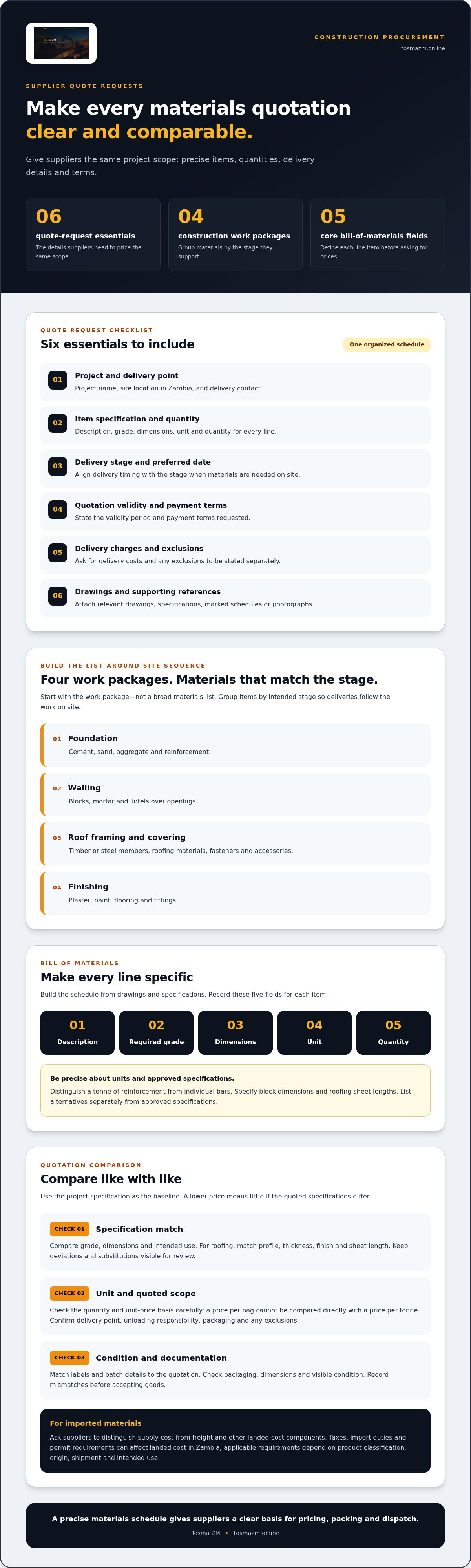
Build a bill of materials from the drawings and specifications. For each item, record its description, required grade, dimensions, unit, quantity, and delivery point. Distinguish a tonne of reinforcement from individual bars. Specify block dimensions and roofing sheet lengths rather than using broad labels. List alternatives separately from approved specifications so quotations remain comparable. Group items by delivery stage, such as foundation, walling, and roof installation. This also helps identify storage needs: keep cement dry, protect timber from ground moisture, and stack roofing sheets securely. Include handling limits in the site plan. A precise materials schedule gives suppliers a clear basis for pricing, packing, and dispatch.
Supplier contact and quote requests
A clear request helps suppliers price the same scope. Send one organized materials schedule rather than scattered messages. Identify the project location in Zambia and the delivery point. Name each item by its specification and unit. For example, describe roofing sheets by profile, thickness, finish, and length. Include a quantity for every line and attach relevant drawings or marked schedules. State whether substitutions are acceptable. If they are not, write “specified item only” to prevent alternatives from being mistaken for approved materials.
Structure the request so suppliers can respond consistently. Include these details:
- Project name, site location, and delivery contact.
- Item description, grade, dimensions, unit, and quantity.
- Required delivery stage and preferred delivery date.
- Requested quotation validity and payment terms.
- Separate delivery charges and any stated exclusions.
- Supporting drawings, specifications, or photographs.
Ask for a written quotation with each item listed separately. Request the brand or manufacturer where relevant. Ask for unavailable items to be identified separately, and keep any substitutions visible for technical review. For imported goods, ask the supplier to distinguish the quoted supply cost from freight and other landed-cost components. This clarifies the scope without assuming a particular tax treatment. Record the quotation date and reference in your procurement file.
Before issuing a purchase order, compare the quotation with your request. Check units carefully: a price per bag cannot be compared directly with a price per tonne. Confirm the delivery point, unloading responsibility, and packaging. Note the stated lead time and any conditions for partial deliveries. If an item, quantity, or specification differs, request written corrections. Save the final quotation alongside the approved materials schedule. This record supports checks when the goods arrive on site.
For a project requiring coordinated material procurement, send the schedule with the relevant delivery details through construction supply enquiries. A complete request gives the supplier a workable basis for preparing a project-specific quotation.
How do I compare the quality and prices of construction materials?
Compare like with like before selecting a quotation, using the project specification as your baseline. For cement, compare the stated type and grade. For roofing, match the profile, thickness, finish, and sheet length. For timber, compare dimensions, treatment, and intended use. A lower price means little if the specifications differ. Record deviations beside each item and keep approved requirements separate from optional alternatives.
Assess quality through documentation and inspection. Match product labels to the quotation and delivery documents. Check batch markings, packaging, dimensions, and visible condition. For steel, compare the specified grade and bar dimensions. For blocks, check consistent sizing and visible damage. Inspect roofing sheet edges and surfaces. Product documentation can help establish whether an item meets the project specification. Record any mismatch before accepting the goods.
Build a comparison table with one row per material. Include these fields:
- Specified description, grade, and dimensions.
- Quoted brand or manufacturer, where provided.
- Quantity, unit, and unit-price basis.
- Delivery location, timing, and transport charges.
- Exclusions, substitutions, and payment terms.
Normalize units before comparing totals. A cement quotation priced by bag differs from one priced by tonne, so convert both to the project’s required purchasing unit and keep the calculation visible. Compare delivery charges separately from material costs. Include unloading, packaging, and partial deliveries where quoted. For imported goods, distinguish the item cost from freight and other landed-cost components. This makes differences in scope visible without assuming identical import treatment.
The price depends on the material, specification, quantity, delivery point, and timing, and is provided after a quote request. Choose an offer that meets the specification, fits the project schedule, and covers the required delivered scope. Do not compare only the lowest line price. A roofing sheet with a different profile may need different accessories, while a timber substitution may change the framing plan. Record the selected specification and quotation reference in the purchase file so the receiving team has a clear basis for checking deliveries.
How can I estimate the quantity of construction supplies needed for a project?
Start with the latest drawings and project specifications. Divide the work into measurable sections, such as foundations, walls, floors, and roofs. Record each dimension and unit. For a rectangular slab, multiply length by width to calculate its area, then multiply the area by depth to calculate concrete volume. Keep calculations separate for each location. This makes revisions easier if a drawing changes. Use specified dimensions rather than rough site estimates.
For walling, measure the wall length and height, then deduct openings shown on the drawings. Calculate the net area using the specified block dimensions. For roof coverings, use the roof geometry and sheet coverage, including overlaps and ridges. For reinforcement, follow the bar schedule and lengths. Do not estimate steel from floor area alone. Calculate timber quantities from framing plans, member sizes, and spacing. Each material requires a different takeoff method.
Use a consistent worksheet for every item:
- Drawing reference and work location.
- Measured dimensions and calculation method.
- Net quantity and purchasing unit.
- Specification, grade, or material size.
- Separate allowance for cuts or damage.
Keep net quantities separate from ordering quantities. Add a waste allowance only when justified by the design, cutting pattern, handling, or site conditions. Do not apply one blanket percentage to cement, blocks, steel, and roofing. Sheet layouts can create offcuts, while concrete volume depends on actual form dimensions. Record the reason for each allowance. Have the site team compare the takeoff with site access, storage, and the planned work sequence.
Check the schedule against drawings before requesting a quotation. Confirm units are consistent, such as cubic metres for concrete inputs and pieces for blocks. Recalculate changed dimensions, then revise affected line items only. This keeps the procurement record aligned with the current design. Submit your materials schedule to request a project-specific construction supply quotation.
Tosma ZM: Construction Supply
Tosma ZM provides Construction Supply for projects requiring building materials and procurement support. Use this service when your materials schedule is ready and you need a project-specific quotation. Include item descriptions, specifications, quantities, delivery point, and required timing to define the scope and support coordination with your project schedule. For orders covering several material categories, organize the request by work stage, such as foundation, walling, or roofing. This makes the items easier to review against project needs. Contact Tosma ZM to discuss your construction material requirements.
Move Your Procurement Plan Forward
A materials order sets the pace for site work. Make the next decision with the project’s procurement priorities in view. If your requirements extend beyond construction supplies, Tosma ZM also offers Vehicles & Fleet and Mining Equipment. Keeping related procurement needs in the same planning conversation can help clarify what your project requires and which requests should be handled separately. The right next step is practical: share the scope you are preparing, including the project’s material needs and any related supply requirements. Tosma ZM offers Construction Supply for buyers seeking materials for their projects. Start a direct conversation about your requirements and the next procurement step. Contact Tosma ZM about supplies and move your project planning forward with a clear path to request support.
Frequently Asked Questions
What construction supplies are commonly used for building projects?
Common construction supplies include cement, aggregate, reinforcement steel, blocks, timber, roofing sheets, and plumbing or electrical fittings. Interior work may also require plaster, paint, floor finishes, and fixtures. Project drawings determine the applicable grades, dimensions, and quantities. For example, a drainage plan may call for pipes and fittings that a general building materials list would miss.
Where can I buy construction supplies in Zambia?
Tosma ZM supplies construction materials, plant, and on-site machinery through its Construction Supply offering. For a purchase enquiry, describe the project type and materials required. Include their specifications and intended use, especially when a component must match existing work. A clear description helps focus the procurement discussion on items relevant to your project.
Which construction suppliers in Zambia offer delivery?
Delivery arrangements depend on the order and destination. Tosma ZM serves customers nationally. Include the delivery point and any site-access details in your construction supplies request, such as restricted vehicle access or a designated drop-off area. This helps define delivery requirements alongside the materials requested, since receiving arrangements vary from site to site.


