

For building projects in Zambia, procurement can include electrical, plumbing, roofing, steel, aluminium, general building and safety supplies. A construction materials supplier in Zambia can bring these requirements into one purchasing process and plan delivery around the destination, load and site access. A clear supply plan links the materials list to practical delivery arrangements.
Project teams need more than a list of materials. They need to know which categories suit the work and how sourcing, transport and delivery coordination affect supply to the site. This guide covers key building supplies and the logistics involved in getting them to projects across Zambia.
Find an overview of major supply categories, factors that shape delivery and ways construction supply can support commercial and industrial procurement. Use it to organize your requirements and set the next steps for your project.
Key Takeaways
- Map electrical, plumbing, roofing, steel and aluminium requirements against the project specifications before placing an order.
- Plan delivery around the site location, access conditions, load requirements and the sequence of construction work.
- Coordinate building materials and safety gear with the tasks on site so procurement supports both construction progress and worksite readiness.
- Compare supplier capabilities by how well they can align material sourcing, order coordination and delivery needs for your project.
Electrical, plumbing, roofing, steel and aluminium supplies
Match each supply schedule to the project drawings and site conditions. Before ordering, compare specifications, dimensions, connection methods and handling requirements.
In Zambia, there is no fixed price ranking for cement, steel, roofing sheets, bricks and aggregates. Grade, dimensions, order quantity, sourcing and delivery distance all affect price comparisons. A project quotation is provided after a request, with specifications, quantities, sourcing and transport shaping the cost.
For electrical work, list the cable type and conductor size, switchgear, conduits and accessories shown in the design. Plumbing schedules should specify pipe material and diameter, fittings, valves and connection type. For roofing, match the sheet profile, thickness, finish, fasteners and drainage details to the roof design.
For aluminium, record measured opening sizes, frame sections, glazing interfaces and finish, and link each item to its location on the drawings. For example, grouping a window schedule by building zone helps match frame dimensions to masonry openings and organize phased deliveries.
Steel Reinforcement and Rebar
Steel reinforcement schedules cover rebar and related materials for concrete work. Specify bar diameter, length, grade and quantity according to the structural drawings. Reinforcement bars must match the engineer’s design and placement schedule, including the locations of bends, laps and supports.
Before ordering, compare each material description with the bar schedule and separate quantities by slab, column or beam. This clarifies site allocation and helps prevent confusion between reinforcement requirements. Align delivery and storage plans with the construction sequence.
Steel Sheets, Plates, and Beams
Steel sheets and plates serve different fabrication and structural purposes. Record each item’s thickness, dimensions and intended use. For structural steel beams, include the section designation, length and drawing reference so delivered members can be matched to the specified frame.
List sheets, plates and beams separately in the order schedule. Before procurement, check that each description matches the fabrication drawings. Clear identification helps crews sort materials for cutting, assembly or installation, while planned unloading accounts for each load’s size and handling needs.
Local supply chains and delivery logistics
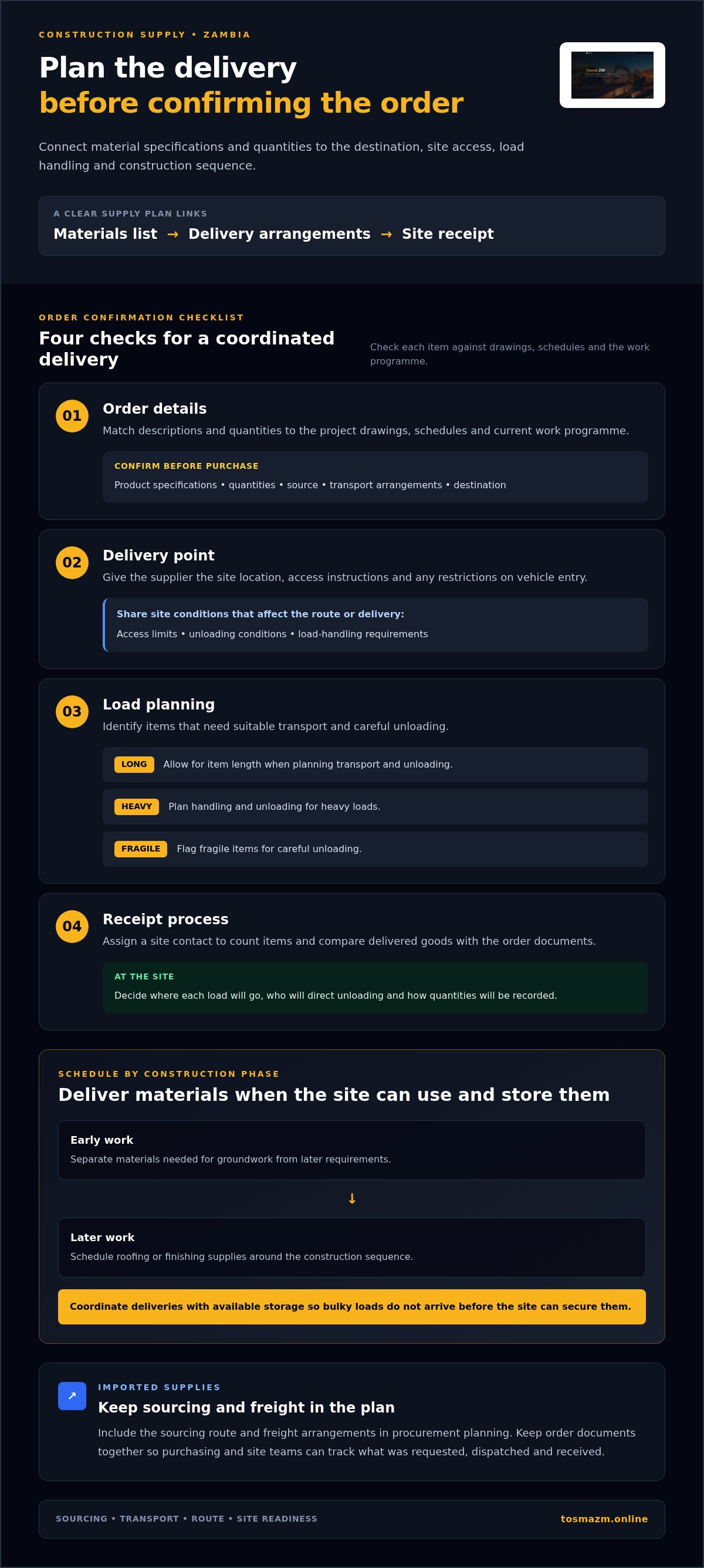
Before ordering, compare each item’s specifications, quantity, source and delivery arrangements. Confirm the destination, unloading access and required on-site sequence.
Before ordering construction materials in Zambia, check product descriptions, quantities, sourcing, transport arrangements and destination. Tell the supplier about site access limits, unloading conditions and load-handling requirements so the order and route can be planned appropriately.
Build the purchase schedule around construction phases. Separate materials needed for early groundwork from later requirements, such as roofing or finishing supplies. This coordinates deliveries with available storage and prevents bulky loads arriving before the site can secure them.
Before confirming an order, align the purchase list with the delivery plan. Use these checks:
- Order details: Match descriptions and quantities to drawings, schedules and the current work programme.
- Delivery point: Provide the site location, access instructions and any restrictions on vehicle entry.
- Load planning: Identify long, heavy or fragile items that need suitable transport and careful unloading.
- Receipt process: Assign a site contact to count items and compare delivered goods with the order documents.
For example, a delivery of steel sections and packaged fittings needs a clear receiving plan. Decide where each load will go, who will direct unloading and how quantities will be recorded. This links material tracking with the purchase order and project schedule.
For imported supplies, include the sourcing route and freight arrangements in procurement planning. Keep order documents together so purchasing and site teams can track what was requested, dispatched and received. Coordinate sourcing, transport, route and site readiness with the construction sequence.
Use construction supply information to consider how sourcing and delivery planning fit your project requirements.
Building materials and safety gear
Group building materials by work stage to align purchases with site progress. A foundation schedule may include cement, bricks, blocks, aggregates and damp-proofing materials. Later packages might cover plaster, flooring, doors and finishing supplies. Match descriptions and quantities to the drawings or bill of quantities before requesting a quotation.
Select materials according to the design, intended use, handling and storage conditions. Cement and other bagged products, for example, need dry, protected storage, while bulky aggregates need space for stockpiling and loading. Separate items by location or work package, such as foundations, walls and finishes, to make allocation and receipt checks easier.
Plan building materials by work package
Prepare a schedule showing each item’s description, unit, quantity and installation stage. List bricks and blocks separately when their dimensions or applications differ. Specify aggregates by type and intended use rather than grouping them under a general label. This detail helps procurement match orders to drawings and supervisors track usage against planned work.
Storage and site access also shape the order sequence. If storage space is limited, plan smaller, staged deliveries instead of one large stockpile. Protect materials from weather and keep them separate when mixing could cause damage or contamination. Record receipts against the purchase schedule to identify shortages or incorrect items promptly.
Match safety gear to site tasks
Build the safety gear list around the work being done. General site tasks may call for hard hats, safety footwear, high-visibility clothing, gloves and eye protection. Cutting or grinding requires suitable eye and face protection, while dusty tasks require appropriate respiratory protection. Clearly specify the task and gear type in procurement records.
Assign gear by role and work area, then track distribution and replacement in site records. Workers handling materials, for example, may need task-appropriate gloves, while visitors need clear access instructions and suitable protective equipment. Include safety supplies in the same planning cycle as building materials so crews have what their scheduled work requires.
Construction materials suppliers in Zambia
Assess suppliers by their product documentation, order terms and ability to support your project requirements. Compare applicable standards, import costs, bulk purchasing terms and payment arrangements.
Supplier Reputation and Product Standards
To assess a supplier’s record, review completed order documents, customer references and quotation clarity. Compare product descriptions with your drawings, bill of quantities and technical specifications. Request relevant product documents and check that stated grades, dimensions and intended uses match project requirements. For example, a specified cement type should not be replaced by a vague description such as “building materials.”
Assess products sold in Zambia against the standards applicable to their category and intended use. Request product specifications and relevant conformity documents, then compare them with the materials schedule before ordering, particularly for structural or electrical components.
Import duties and taxes may apply to imported construction materials, and applicable standards depend on product category and use. Include relevant charges in landed-cost planning and assess each imported item against the project specifications.
Payment methods and credit terms vary by supplier and purchase agreement. Record the agreed method, timing, currency and any credit conditions in the quotation or order documents. Don’t assume credit terms are available.
Wholesale and Bulk Discounts
Suppliers may offer wholesale or bulk terms for larger orders, but discounts are not automatic. Quantity, product mix, sourcing and delivery requirements can affect the quoted terms. Request a written quotation based on your bill of quantities, then compare specifications and delivery arrangements alongside the total order terms.
For example, compare separate quotations for a large roofing-sheet order and a mixed order of roofing, fittings and safety gear. Check that the quantities, product descriptions, delivery destination and payment conditions match. A lower unit price may not offer better value if the specification or delivery plan differs.
Use submit your construction supply requirements to discuss procurement for your project.
Tosma ZM: Construction Supply
Tosma ZM provides Construction Supply for projects in Zambia. Turn to this offering when your team has converted drawings and work packages into a materials procurement list. Organize the request by item description, specification, quantity and planned project stage. Where drawings or bills of quantities define requirements, include them to help structure the procurement discussion. Keep product alternatives separate and aligned with project specifications. A clear schedule helps connect material requirements with site priorities. Tosma ZM also offers Vehicles & Fleet and Mining Equipment for separate operational needs. For construction materials procurement, focus the request on the items your project requires and its delivery destination. Contact Tosma ZM to discuss your construction supply requirements.
Set Up the Next Procurement Decision
Turn your materials schedule into a working procurement document. Before placing the next order, assign responsibility for approvals, substitutions and delivery coordination. This gives the project team a clear record for decisions as requirements change between construction phases.
When choosing a construction materials supplier in Zambia, base the discussion on approved project specifications and purchasing processes. Tosma ZM’s Construction Supply covers materials procurement, while Vehicles & Fleet and Mining Equipment serve separate operational requirements. Keep these needs distinct so each request has a clear scope.
Prepare the item schedule, project destination and purchasing priorities for your next procurement discussion. A clearly defined request keeps attention on the requirements that matter to your site and project team.
Contact Tosma ZM about supplies to discuss your construction materials requirements and plan the next step with confidence.
Frequently Asked Questions
What construction materials suppliers operate in Zambia?
Tosma ZM supplies construction materials, plant and on-site machinery through its Construction Supply offering. Its Import & Export services include freight forwarding and customs clearance for relevant sourcing needs. For a practical comparison, assess the quotation against the project bill of quantities and required material specifications, not broad category labels alone.
Which construction materials suppliers serve projects across Zambia?
Tosma ZM serves customers nationally in Zambia and offers Construction Supply. For orders involving cross-border sourcing, its Import & Export services include freight forwarding and customs clearance. Include the project destination, item descriptions and quantities in your procurement request to define the order and transport scope.
What construction materials are available from Zambian suppliers?
Common procurement categories include electrical and plumbing supplies, roofing materials, steel, aluminium, general building materials and safety gear. A project may also require plant or on-site machinery. Availability varies across suppliers and orders, so create a materials schedule that separates categories, identifies intended use and records required specifications. This gives procurement teams a clear basis for requesting and comparing relevant items.
What are the delivery fees and lead times for construction materials in Zambia?
Delivery fees and lead times depend on the order composition, sourcing, destination, load size and transport route, so no single figure applies to every project. The cost is provided after a quotation request and depends on factors including quantities, specifications, sourcing and transport. Provide the complete materials schedule and site destination to request a scoped quotation and delivery plan.


